
Singapore EC Policy Update: What Every Homebuyer Needs to Know Now

8 May 2026

Singapore’s Executive Condominium (EC) market is entering a new phase following the Government’s latest policy adjustments aimed at improving housing affordability and prioritising genuine owner-occupiers. The most significant update is the introduction of a new  10-year Minimum Occupation Period (MOP) framework for future EC projects.

Under the announced changes, the revised 10-year MOP will apply to all EC Government Land Sales (GLS) sites with tender closing dates on or after  8 May 2026. In addition, more EC units will be prioritised for first-time buyers. These changes were introduced in response to growing affordability concerns and increasing competition in the EC segment.

What Is Changing?

Today, most ECs follow a 5-year MOP before owners can sell their units on the open market to Singaporeans and Permanent Residents. Under the revised framework, selected future EC launches will require owners to hold the property for 10 years before resale to eligible Singaporeans and PRs under HDB rules.

This is a major structural shift because ECs have traditionally occupied a unique position between public and private housing:

  • Subsidised entry pricing
  • Access to CPF Housing Grants (for eligible buyers)
  • Private condominium facilities
  • Potential upside after privatisation

The new policy direction signals a stronger emphasis on ECs as long-term owner-occupied homes rather than short-term upgrading opportunities.

How This Could Affect Buyer Behaviour

One likely outcome is a change in how buyers evaluate EC purchases. Buyers who previously viewed ECs as medium-term stepping stones may now become more selective about:

  • Location quality
  • Nearby schools and transport
  • Family suitability
  • Long-term liveability

A 10-year holding period naturally places greater importance on lifestyle compatibility and future family needs. Buyers may become more cautious about compromising on layout efficiency, accessibility, or surrounding amenities if they expect to remain in the property for a longer duration.

At the same time, first-time buyers may benefit from increased allocation priority. This could improve accessibility for younger families who previously faced intense competition from second-timers and upgrader demand during launches.

Potential Market Impact

While it is still early to determine long-term market outcomes, several trends may emerge over time.

First, EC supply available for resale could become more tightly held due to the extended holding requirement. This may reduce turnover velocity in future EC resale markets.

Second, demand patterns could shift toward EC projects launched before the new framework takes effect, especially among buyers who prefer shorter flexibility timelines. Buyers may begin paying closer attention to launch dates and GLS tender timelines as part of their planning strategy.

Third, developers may increasingly position future EC projects around long-term family living rather than short-term upgrade narratives. This could influence future project design, amenities, and marketing focus.

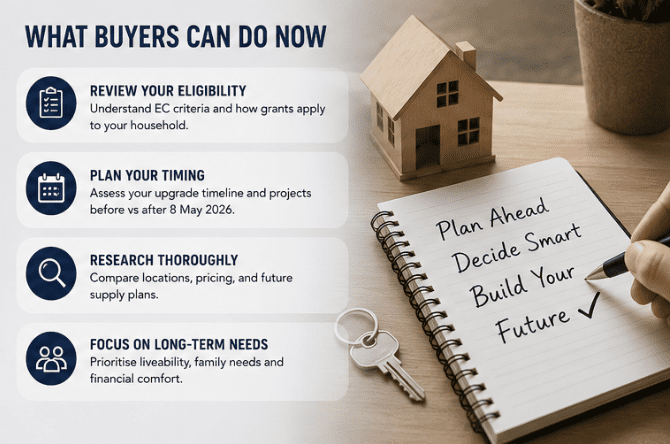
What Buyers Can Do Now

For buyers planning their next move within the next few years, the latest EC policy changes highlight the importance of early preparation rather than reactive decision-making.

Some practical steps buyers may consider include:

  • Reviewing EC eligibility early
  • Understanding how grant structures apply
  • Assessing personal upgrade timelines
  • Comparing projects that may fall before or after the revised framework
  • Evaluating long-term liveability instead of focusing only on launch pricing

Most importantly, buyers should avoid making decisions based solely on speculation or fear of missing out. Housing policies evolve over time, and each household’s financial position, family needs, and risk tolerance remain unique.

What is clear, however, is that Singapore’s EC market is gradually moving toward a more owner-occupier-focused model. For many buyers, understanding these changes early may lead to better planning and more confident decisions in the years ahead.